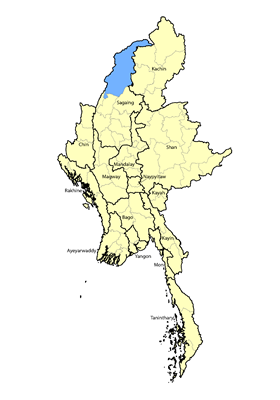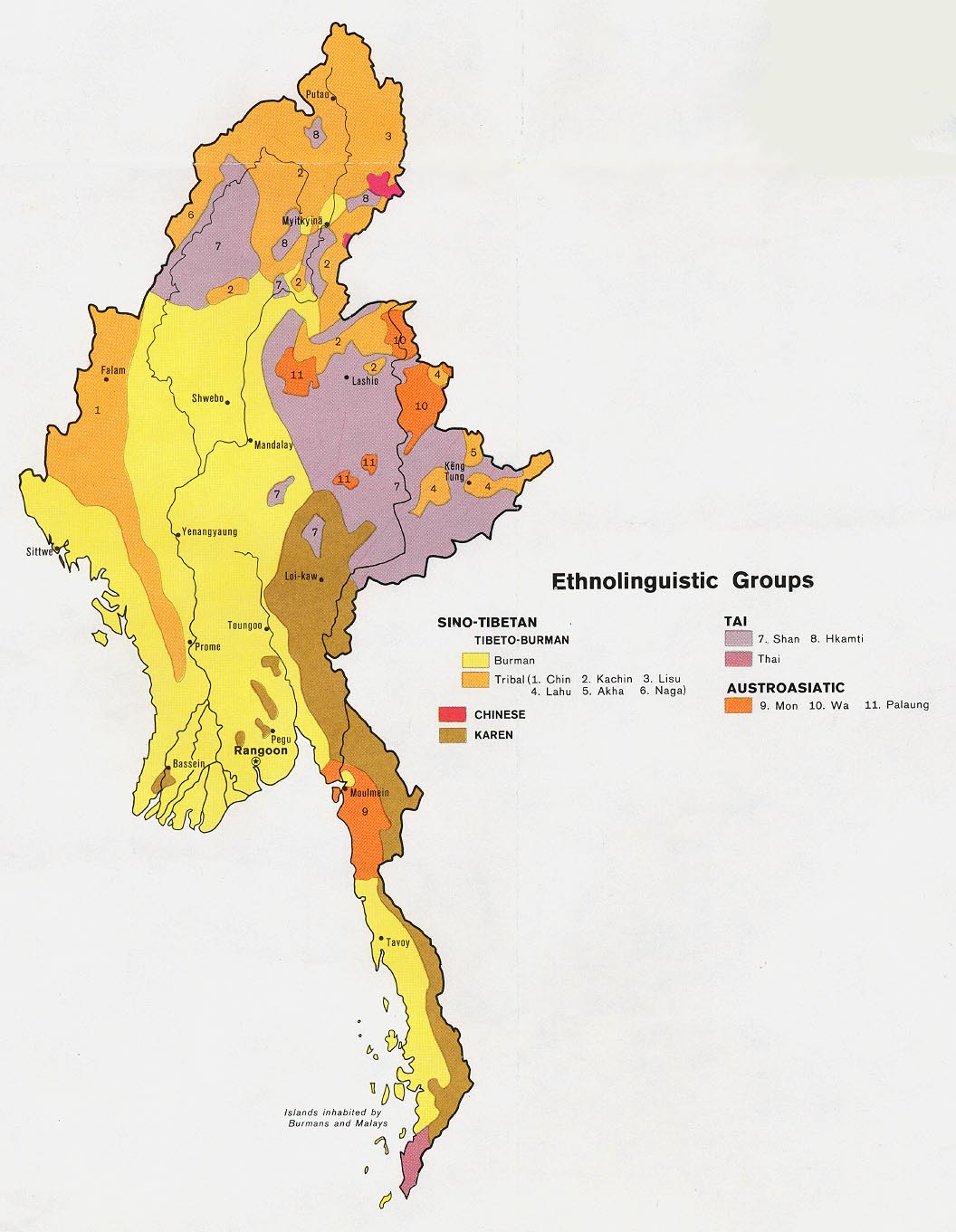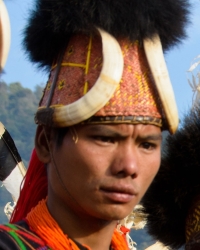

The Lumnu tribe is one of a myriad of people groups crammed into the Pangsau area of Lahe Township in western Myanmar's Sagaing Region. Lahe is one of three townships (with Leshi and Nanyun) comprised by the Naga Self-Administered Zone, which was established in 2008. The little-known Zone occupies a long strip of land along the Indian border, and despite boasting a population of only 130,000, it has an area larger than the U.S. state of Connecticut and its 3.7 million people.
The Lumnu are one of more than several dozen Tangshang tribes in Myanmar. Tangshang is a collection of people groups with similar customs who came together for political strength. The same dynamic took place among tribes in the northeast Indian state of Arunachal Pradesh, where groups chose the label "Tangsa" in the 1950s. A historian recalls: "Leaders of different groups outside the Naga Hills area were told that since they 'wore clothes and were less aggressive' they were different from the Nagas and hence they should have a different name. The elders agreed upon the word Tangsa, which means 'children of the hills.'"
Just one known linguistic study of the Lumnu people took place in 2013, when 40 speakers of the vernacular were surveyed. The researchers concluded that Lumnu was part of a group of Tangshang dialects called Ole, which included several other tribes profiled in this book: Cyamkok, Cyampang, Haqpo, and Nahen. A leader of the linguistic team remarked: "Before printing books, however, leaders from the different Ole-related varieties should meet together to come to agreement about a unified Ole literature. The Ole group varieties are all quite similar. They should build unity among themselves and decide together on one variety that they all agree to use for their literature development."
Because they had no written language, most history of the Lumnu and other Tangshang tribes depends on oral accounts handed down through the generations. Some sources speculate: "The Tangshang are well-built and of medium stature…. Many tell of migrations from Yunnan in southwest China into Myanmar. Traditions suggest that they settled in the existing region from the beginning of the 13th century. It is believed?that in their native places in China and Myanmar they were known as?Muwa?and?Hawa,?respectively.
In 2020, the entire Naga Self-Administered Zone, which is poor and lacking infrastructure, had only two resident doctors to serve its population of 130,000 people. An outbreak of measles in October 2016 resulted in the deaths of 44 children due to the almost complete lack of medical care in the area.
For centuries the Lumnu and other Tangshang tribes carefully observed an intricate array of animistic rituals. They believed that "all activities, from simple household and economic tasks up to dancing and feasting, had a mystical or religious significance. The spirits which controlled the realities of life—disease, human and crop fertility, rain—needed constant attention." In recent decades the grip of Animism has diminished as people surrendered their lives to Christ and were transformed by His grace.
The first Tangshang Christians in this part of Myanmar appeared in the 1950s, but it was generally in the 1980s and 1990s that Christianity blossomed. Today most Lumnu people are Christians, with a smattering of Buddhists and animists among them. Without any Scripture in a language they can understand, it is thought the Lumnu believers have been forced to use Burmese Bibles, which are difficult to comprehend for many people.
Pray for strong, healthy Lumna families and for people to have their spiritual hunger satisfied in Christ alone.
Pray that Christian believers within the Lumna community would be encouraged and equipped to serve their neighbors with humility and compassion.
Pray for them to become Christ's ambassadors to a dying world.
Pray for them to walk in the fruit of the Holy Spirit, drawing many to the Lord of lords.
Scripture Prayers for the Lumnu in Myanmar (Burma).
Asia Harvest, Copyrighted 2026 © Used with permission
| Profile Source: Joshua Project |
| Other PDF Profile |